The 2025–2030 Dietary Guidelines for Americans, released in early 2026 by the U.S. Departments of Agriculture and Health and Human Services, introduce several notable shifts compared with previous editions. First, they place a much stronger emphasis on whole, minimally processed foods and urge Americans to avoid highly processed foods and refined carbohydrates, a first for these federal guidelines. The update also recommends significantly higher daily protein intake (about 1.2–1.6 g per kilogram of body weight) and highlights a wide variety of protein sources from both animal and plant foods. Importantly, the guidelines explicitly include full-fat dairy with no added sugars as part of a healthy dietary pattern and suggest using a broader range of healthy fats (e.g., olive oil, nuts, seeds, and even traditional fats like butter and beef tallow), while retaining a limit on saturated fat at no more than 10 % of daily calories. The new guidance also strengthens limits on added sugars—recommending no more than 10 g per meal—and shifts alcohol guidance toward a general “consume less” message rather than specific drink limits.
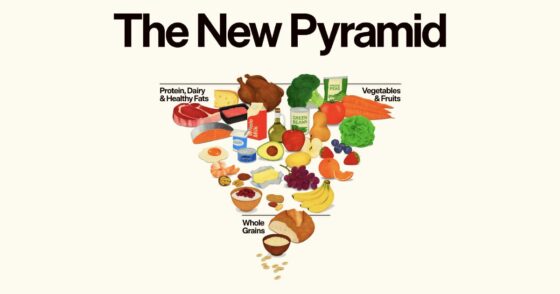
Visually and conceptually, the update replaces the previous MyPlate graphic with an inverted food pyramid that places protein, dairy, healthy fats, fruits, and vegetables at the top, and whole grains lower down, signaling a reprioritization of food groups. The guidelines also call for eating the right amount of food based on individual needs (age, activity, etc.), and include tailored considerations for various life stages and populations. These changes mark a shift toward what officials describe as “real food” and nutrient-dense eating patterns, though some nutrition experts have expressed concerns about the emphasis on higher protein targets and saturated fat food sources, as well as how the advice diverges from the recommendations of the scientific advisory committee.